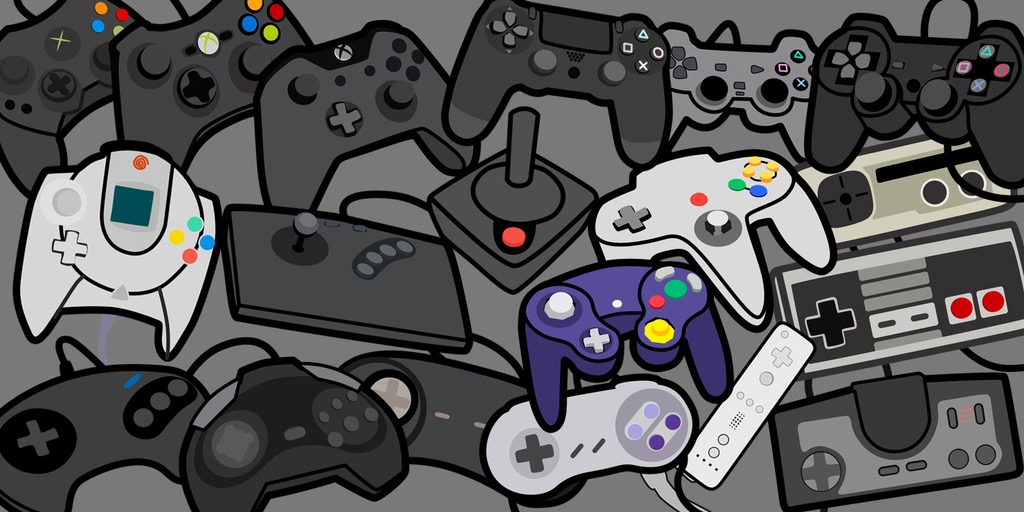
Source: Myers, J. [n.d.]. The evolution of video games. Sutori.
Leveling Up: The Epic Journey of Gaming Evolution
By Mel Tristan Baquiano
Gaming has changed a lot since it began, going from simple games to complex, immersive experiences that attract millions of people worldwide. As technology improved, so did games, turning the gaming industry into a global powerhouse. This article takes a quick look at the history of video games and consoles, highlighting key moments in gaming's evolution.
Gaming started in the 1950s when computer scientists created basic games as part of their research. Early examples include Nimrod (1951) and Tennis for Two (1958). These games were not popular with the general public, but they set the stage for future developments. In the 1960s, more advanced games like Spacewar! (1962) were created, mainly enjoyed in academic circles.
The 1970s was when the video game industry truly began. Ralph Baer, often called the "Father of Video Games," developed the Magnavox Odyssey in 1972, the first commercial home console. Around the same time, Atari released Pong, one of the first arcade games, which became a huge hit. This period also saw the rise of other arcade games like Gran Trak 10 (1974) and Tank (1974), which helped grow the gaming industry.
The late 1970s and early 1980s were known as the Golden Age of Gaming, marked by the boom of arcade games. Space Invaders (1978) started a gaming craze, followed by classics like Pac-Man (1980) and Donkey Kong (1981). These games led to the rapid growth of arcades and the creation of the second generation of home consoles, including the Atari 2600 and Intellivision. During this time, the US gaming industry saw massive revenue growth, showing how popular video games had become.
The 1980s also saw the rise of home computers like the Commodore 64 and the Apple II, making gaming more accessible to everyone. During this time, Nintendo’s Game & Watch series brought the first handheld gaming devices to the market. Despite a crash in the video game industry in 1983, which caused a drop in console sales, personal computers started to take over, leading to the first online games, like early MMORPGs (Massively Multiplayer Online Role-Playing Games).
The 1990s brought big improvements in gaming technology, including the shift from 2D to 3D graphics. This period saw the birth of famous game series and genres, like first-person shooters with games like Doom (1993) and survival horror with Resident Evil (1996). The competition between Nintendo, Sega, and newcomer Sony heated up, with the PlayStation becoming a major player. Meanwhile, arcade games began to lose popularity as home consoles became more advanced.
The 2000s brought in a new era of gaming, with the rise of online gaming and mobile games. Xbox Live and PlayStation Network changed multiplayer gaming, while the success of mobile games like Angry Birds and Candy Crush made gaming more popular with a wider audience. The eighth generation of consoles, including the PS4 and Xbox One, continued to push the limits of gaming with better graphics and more immersive gameplay.
As we move into the 2020s, gaming keeps evolving quickly. The release of the PS5 and Xbox Series X marks the next step in console gaming, while advancements in cloud gaming, like Google Stadia and Amazon Luna, suggest a future where gaming might not rely on traditional hardware. With ongoing improvements in virtual reality, augmented reality, and artificial intelligence, the future of gaming looks bright, with even more exciting developments on the horizon.
References:
BluEnt. (2024, May 9). Evolution of gaming – its transition over the years. https://www.bluent.com/blog/evolution-of-gaming/#roots_video_gaming
Chikhani, R. (2015, October 31). The history of gaming: An evolving community. TechCrunch. https://techcrunch.com/2015/10/31/the-history-of-gaming-an-evolving-community/
The evolution of video games: From "Pong" to virtual realities. (2023, August 2). Anythink Libraries. https://www.anythinklibraries.org/blog/evolution-video-games-pong-virtual-realities
Institution, S. (n.d.). Video game history. Smithsonian Institution. https://www.si.edu/spotlight/the-father-of-the-video-game-the-ralph-baer-prototypes-and-electronic-games/video-game-history